Do authors really need a website? Someone asks this exact question on r/selfpublish about once a week. The answers are always some version of "it depends on your goals" or "it can't hurt" or "wait until you have a few books out." Polite, noncommittal, unhelpful.
Here's a less polite answer: yes, you need a website. The fact that you're searching for permission to skip it is probably the clearest sign that you know you need one.
But not for the reasons most articles give. It's not about "looking professional." It's not about "building your brand." It's about owning something.
The short answer
Yes. Every author, in every genre, at every stage of their career. Not because some marketing blog told you to. Because every other piece of your online presence belongs to someone else. Your Amazon page belongs to Amazon. Your Instagram belongs to Meta. Your Linktree belongs to Linktree. A website is the one thing that's actually yours. And no, a Linktree is not a substitute.
What happens when you don't have a website
Picture this. Someone hears about your book at a dinner party. They pull out their phone and type your name into Google. What do they find?
An Amazon product page you can't edit, surrounded by "customers also bought" links to your competitors. A Goodreads profile with a blurry photo you uploaded in 2019 and a bio that still says "debut novelist." An Instagram grid they have to scroll through for 30 seconds to figure out what you actually write. A Linktree with six links, two of which are dead. If you're especially lucky, a Reddit thread from someone asking whether you're still publishing.
None of this is under your control. None of it tells the reader what you want them to know. And none of it gives you any way to stay in touch with the person who was interested enough to Google you in the first place.
That person at the dinner party? They looked at your Amazon page for four seconds, thought "huh, interesting," closed the tab, and forgot about you by dessert. You'll never know they existed.
Social media is rented land
You've heard this metaphor before, but it keeps being true because the platforms keep proving it.
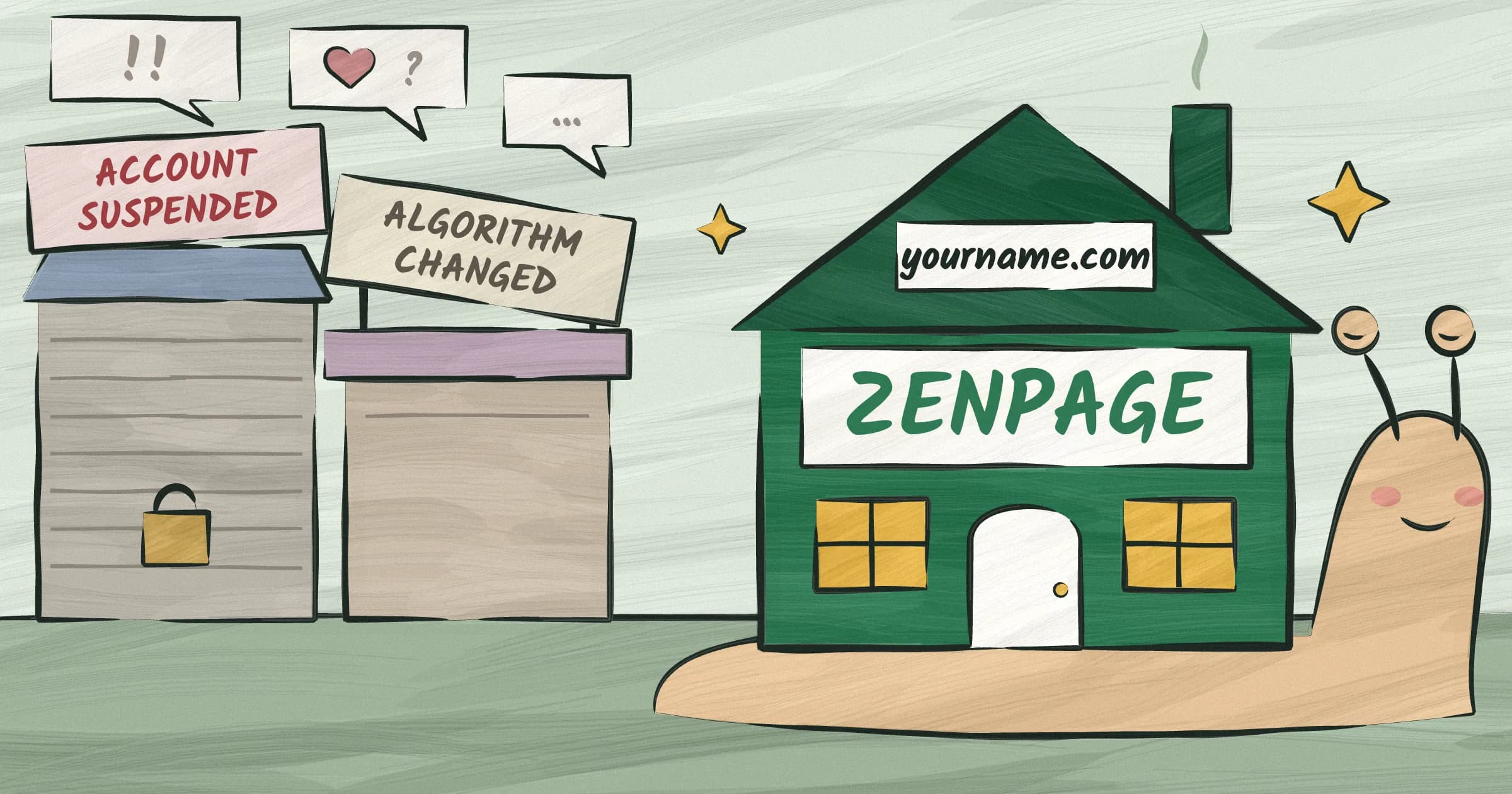
In 2023, Twitter became X and half its users spent six months figuring out whether to stay or go. Organic reach on Facebook has been essentially zero for years. TikTok got banned, then unbanned, then threatened with another ban, and no one knows what's happening next quarter. Instagram changes its algorithm so often that strategies from January stop working by March.
Every time a platform changes its rules, creators lose access to audiences they spent years building. The people who followed you on TikTok aren't your audience. They're TikTok's audience. TikTok lets you talk to them, for now, under conditions that TikTok decides, on a schedule TikTok controls.
Your followers on social media are not your audience. They're a rented audience, and the landlord can change the locks any time.
A website is the one channel where this doesn't apply. You own the domain. You control what's on it. Nobody's algorithm decides whether your readers see your content. Nobody's terms of service can take it away from you.
What your website actually does for you
This isn't a features list. These are outcomes.
Readers find you when they search your name. A well-structured author website will rank higher than your Amazon page for your own name within a few months. Our author website SEO guide explains how to make this happen. That means when someone Googles you, the first thing they see is a page you control, with the information you chose, looking the way you want it to look.
You have one place for all your books. Every title, every cover, every buy link to every retailer. Not scattered across Amazon, Bookshop.org, and your publisher's website. One page, your page, with everything a reader needs to find and buy your work.
You can collect email addresses. This is the real reason. Social media followers are rented. Email subscribers are yours. When your next book comes out, you don't have to hope the algorithm shows your announcement to 3% of your followers. You send an email. They see it. That's the entire newsletter value proposition, and it's worth more than any other marketing tool available to authors.
Email is the one social currency that doesn't depreciate. Your Twitter follower count means nothing if the platform throttles your reach tomorrow. But an email list of 500 people who voluntarily signed up to hear from you? That's 500 people you can reach directly, any time, for free, forever. No middleman. No algorithm. Zenpage has built-in newsletter integration with Mailchimp, Kit (ConvertKit), Substack, Beehiiv, Brevo, and MailerLite. Real API integration, not just an embed code. You don't need to be technical to set this up.
Industry people can find you too. Publishers, agents, journalists, event organizers, podcast hosts, and bookstagrammers all need the same thing: a strong bio, a headshot, a list of your books, and a way to contact you. Right now, they're piecing this together from five different sources. A website puts it all in one place. It makes you easy to work with, which makes people more likely to work with you.
"But I only have one book"
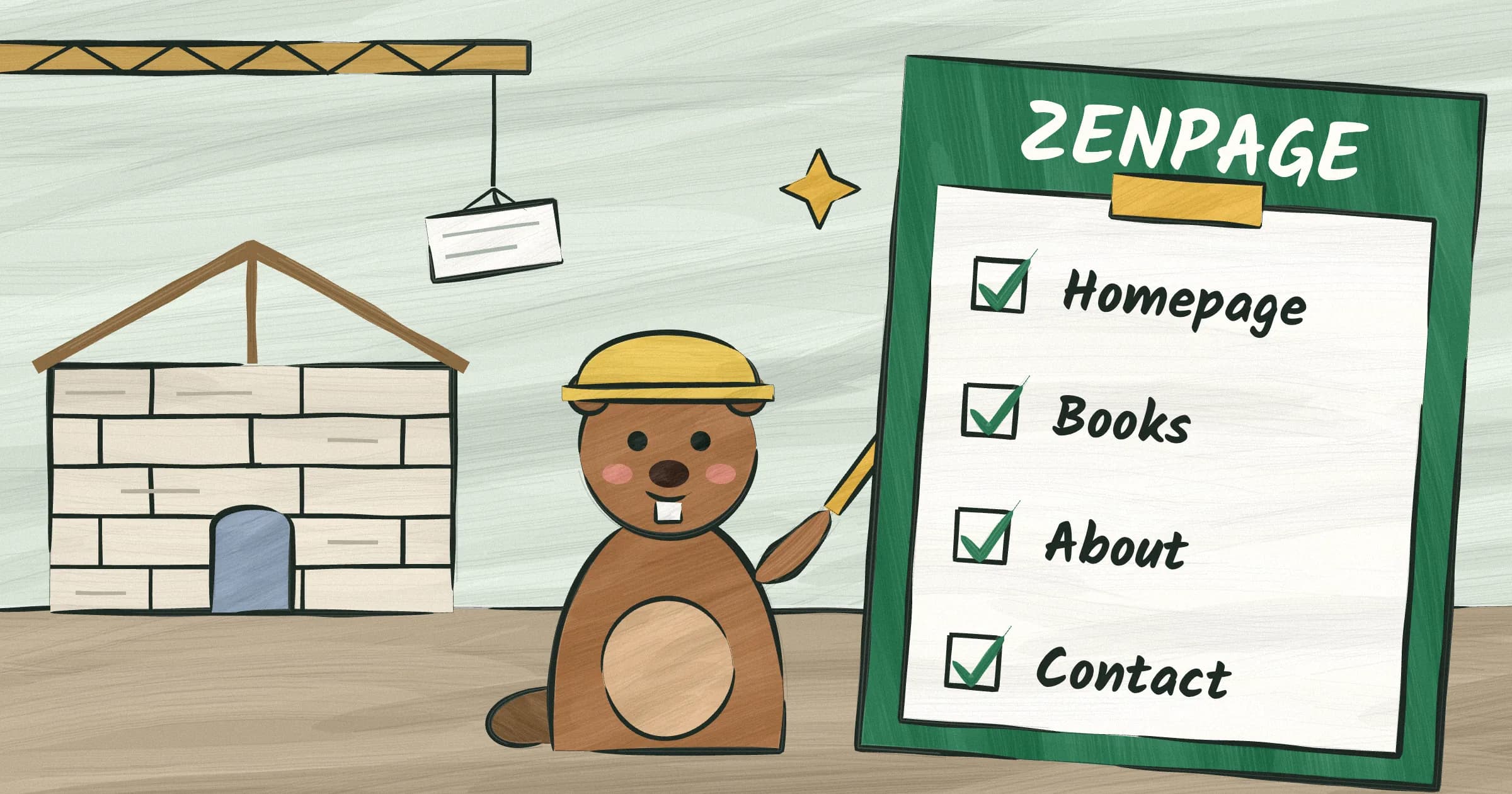
You don't need ten books to justify a website. You need one page with your book on it, one page with your bio, and a way for people to reach you. That's a website. Our author website checklist covers exactly which pages to include and why.
If anything, having only one book makes it simpler. Your homepage IS your book page. Cover, description, buy links, done. No complicated navigation, no "which book should I read first" confusion. One book, one page, one call to action.
Some of the most effective author websites I've seen belong to debut novelists. They have three pages. The site loads fast, the book is front and center, and there's a newsletter signup for people who want to hear about the next one. Clean, focused, and better than 90% of the bloated multi-page messes that established authors are dragging around.
Browse Zenpage's templates if you want to see what a one-book site looks like. Pick a template, add your book, write a short bio. You're done.
"But I'm not published yet"
Even better. You have time to set up before the stakes are high.
Claim your name as a domain now, while it's available. If your name is Sarah Chen and sarahchen.com is taken, grab sarahchenauthor.com or sarahchenwrites.com. Domains cost about $12 a year. That's cheaper than the regret of losing your name to a dentist in Ohio.
Start a simple blog. Write about your genre, your reading life, the books that shaped you. You don't need to post every week. Once a month is plenty. What you're doing is building a small archive of content that Google can index, so that when your book launches, your site already has some authority. Authors who start their website the week their book comes out are six months behind authors who started their website six months before their book came out.
Set up a newsletter signup. Even if you only get 50 subscribers before launch, those are 50 people who asked to hear from you. That's 50 guaranteed readers on day one. Fifty people who will leave reviews, share your launch post, and tell their book clubs. The math only gets better from there. And you don't get those 50 people without a website. Instagram bios don't have newsletter signup forms.
How long it actually takes
Not "a weekend." That's what people say when they haven't actually done it.
The real answer depends on the tool.
If you're using a general-purpose builder like Squarespace or Wix, budget a full day. You'll spend an hour picking a template, another hour realizing it doesn't quite work for books, and the rest of the day rearranging widgets and fighting with mobile layouts. The site will look fine. You'll wonder if it could look better. You'll spend a second day tweaking fonts.
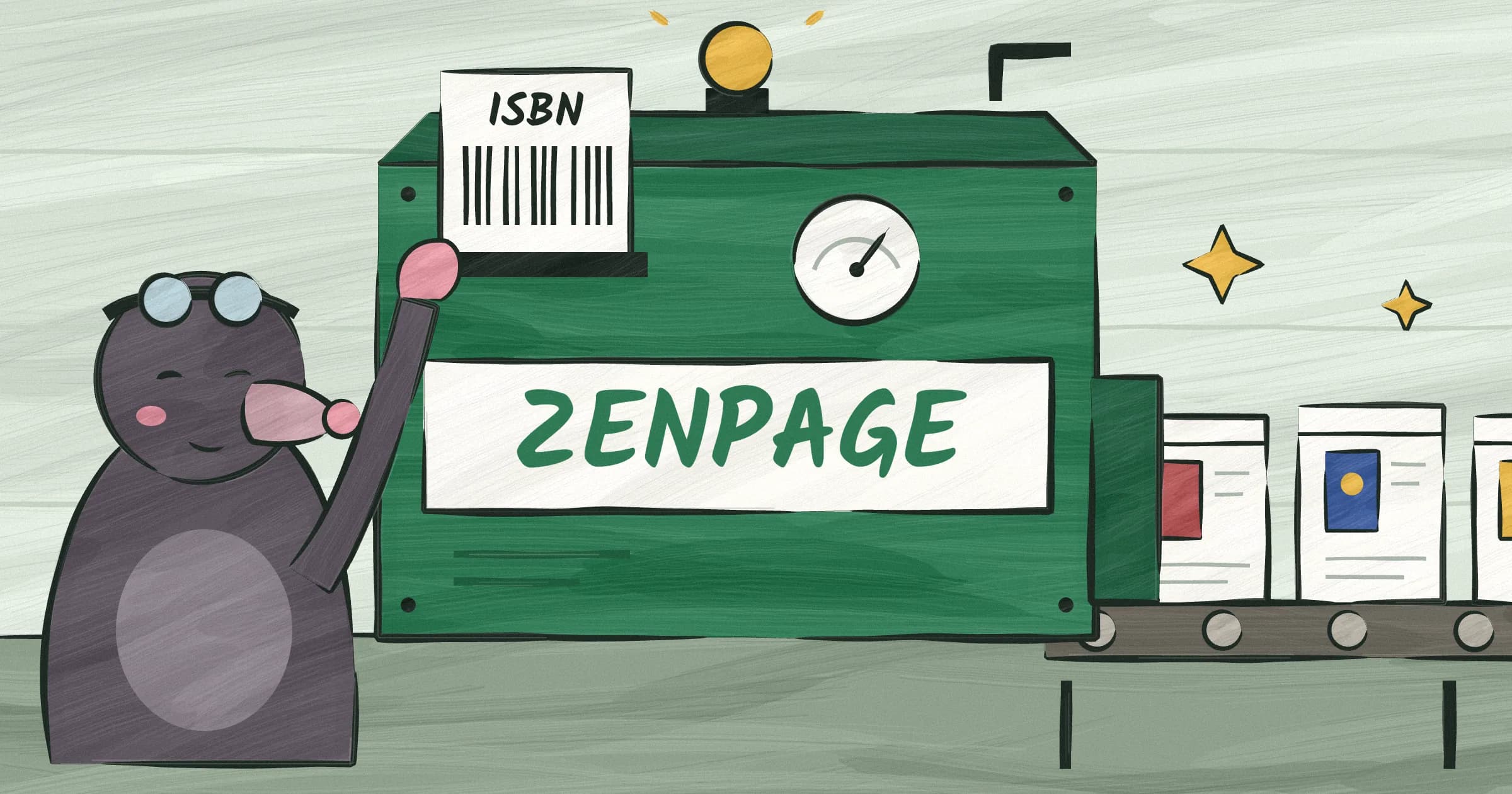
If you're using an author-specific platform, it's faster. Tools like Zenpage can have you live in about 15 minutes. You pick a template, paste an Amazon link or ISBN, and the system pulls your book covers, descriptions, and buy links from Amazon automatically. Add a bio, choose your colors, hit publish. That's not marketing language. That's the actual process.
If you're hiring someone to build it for you, budget 2-6 weeks and $500-5,000 depending on complexity. This makes sense for established authors with complex needs. For everyone else, it's like hiring a contractor to hang a picture frame. We break down every option, free and paid, in our guide to the best author website builders.
The point is that "it takes too long" hasn't been a valid excuse since about 2024. The tools have caught up.
What about Linktree?
Linktree is a list of links on someone else's domain. It's not a website. It has no SEO value (Google doesn't rank Linktree pages for your name), no book pages, no blog, no newsletter, and no personality. When a reader lands on your Linktree, they see six text links with no context. No cover art, no description, no reason to choose one link over another.
If you have a website, put the URL in your social media bios and skip Linktree entirely. Your homepage already does everything Linktree does, except better, because it has context. A book cover next to a description next to a buy button will always outperform a plain text link that says "Buy my book on Amazon."
You can use both if you want. But if you have a website, Linktree becomes redundant. Your site IS the link page, except it also builds your SEO, captures email signups, and actually looks like it belongs to a real author.
The real question isn't whether you need a website
It's why you're still talking yourself out of one.
The objections are always the same. I only have one book. I'm not published yet. I don't have time. I'm not technical. It costs too much (it shouldn't, and we did that math). I'll do it later. None of these are reasons. They're just delay.
Meanwhile, a reader Googled your name last Tuesday. They found your Amazon page, looked at it for four seconds, and closed the tab. You have no idea who they were. You have no way to reach them. They're gone.
A website won't solve every marketing problem. It won't sell your book for you. But it will give you a home on the internet that you control, where readers can find you, learn about your work, and choose to stay connected. Every other digital marketing strategy you try, from newsletters to social media to paid ads, works better when there's a website at the center of it.
The authors who do well online aren't the ones with the biggest social media followings. They're the ones with a home base. Want to see what that looks like in practice? Check out the three best author websites of 2026 and learn from what they get right. Also make sure you're not sabotaging yourself with common author website mistakes. A place that works for them whether Twitter implodes, TikTok gets banned, or Instagram decides that carousels are out and 90-second videos are in. A website doesn't care about any of that. It just sits there, doing its job, catching the readers who are already looking for you.
Your readers are already searching for you. Give them somewhere to land. See our features, browse the pricing, or check the FAQ if you have questions.